Wandering School (home education)
Nature’s School
Into the mountains with my son
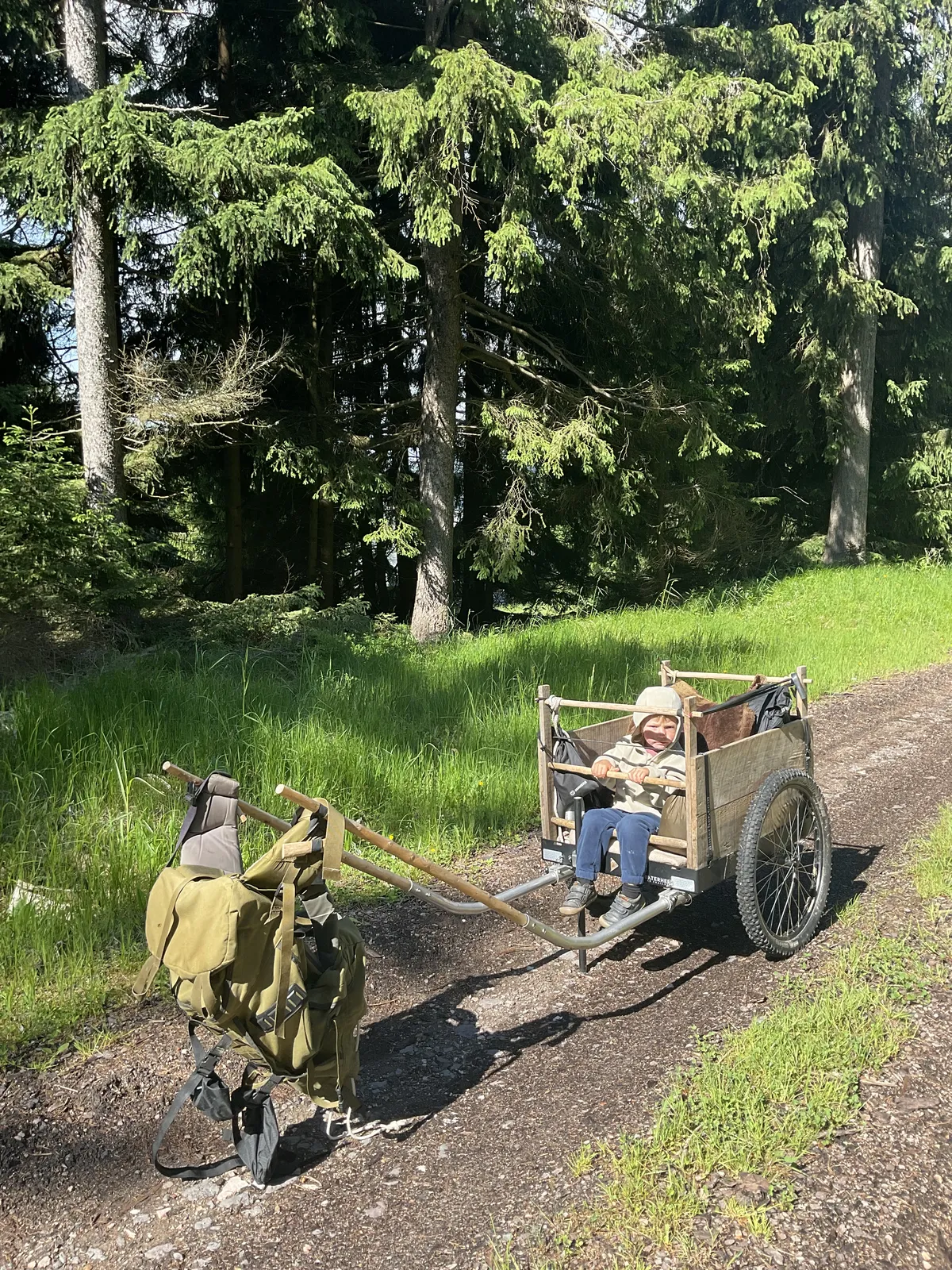
From our cabin, we set off on foot into the mountains. The sky was torn between rain and sun, but Amaru was impatient — there was no postponing our departure. I know that rain and cold are a school in themselves.
I had hitched up my walking cart — a Hinterher trailer I bought two years ago, going directly to the manufacturer’s workshop on the outskirts of Munich. It lets me carry everything we need to be self-sufficient: sleeping bag, tarp, tent, cooking pot, wool blanket, warm clothes and food. My son can ride in it comfortably. I can also attach it to a bicycle. With it, I live without a car, hauling wood, water, my children…
I love the effort of pulling — similar to dragging a pulka across snow. The poles engage the entire upper body while the back stays free from the load. For this trip, I was pulling around fifty kilograms through the mountains without exhaustion. In three days, we covered forty-five kilometres.
The Giant Mountains — in the north of the Czech Republic — are laced with cycling paths that cross the entire national park. These trails let us roam through nature without worrying about cars.
Compulsory school from age three
For several years now, the French government has required parents to enrol their children in school from the age of three. Home education has become the exception, subject to strict conditions. We applied for it as a travelling family, and are currently awaiting a response from the académie de Besançon — an application that must be renewed every year.
My children learn from nature. They fall asleep with the sun and wake at dawn. I teach them to forage for plants, to fish, to build. The gestures of daily life are a school: fetching water, doing laundry, preparing meals, lighting a fire, roaming the world, meeting others.
Our lives are governed less by the clock than by the needs of our family. We spend much of the year without running water or electricity. A life of little, which gives us much freedom and time — and which demands different kinds of effort.
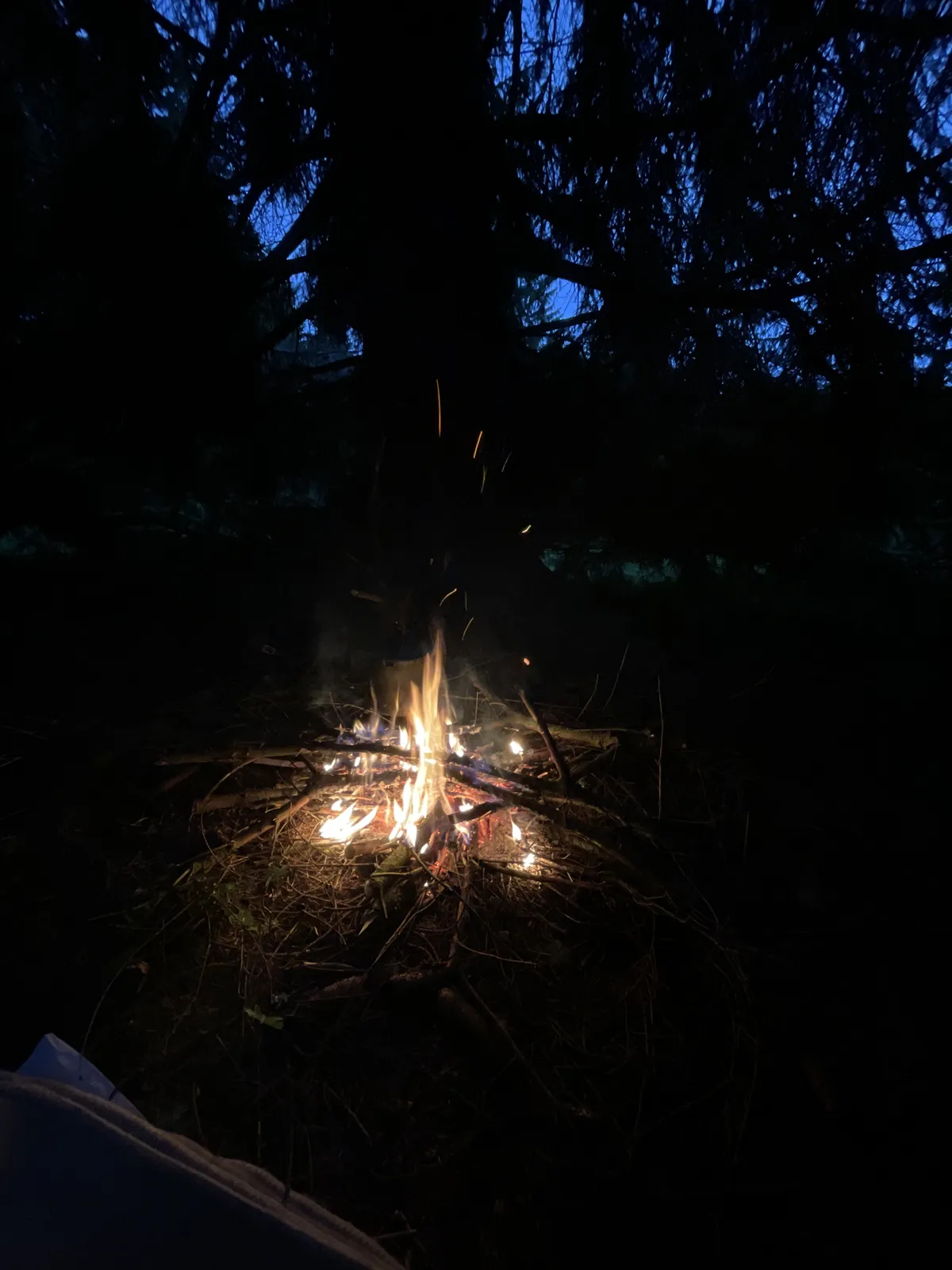
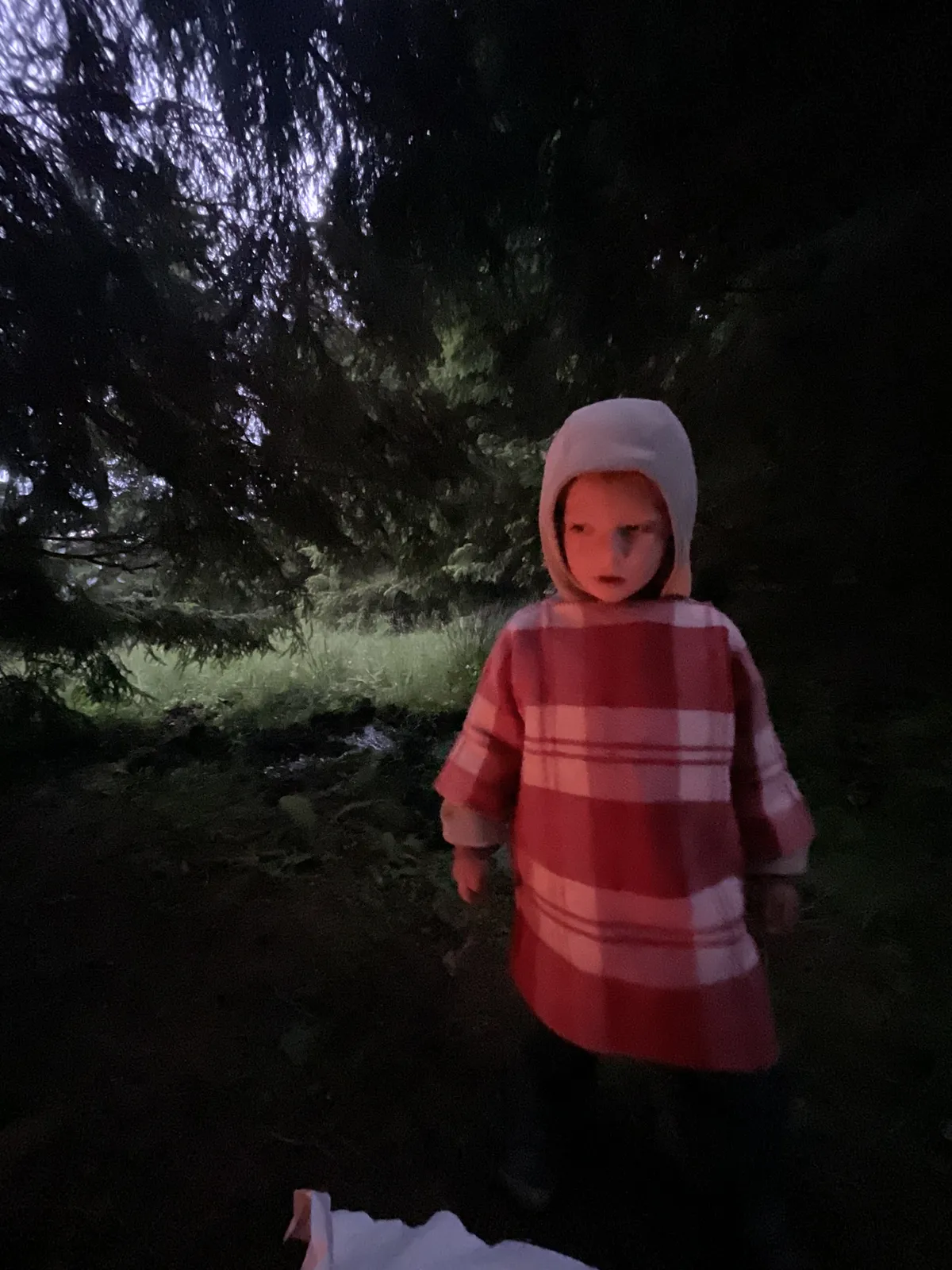
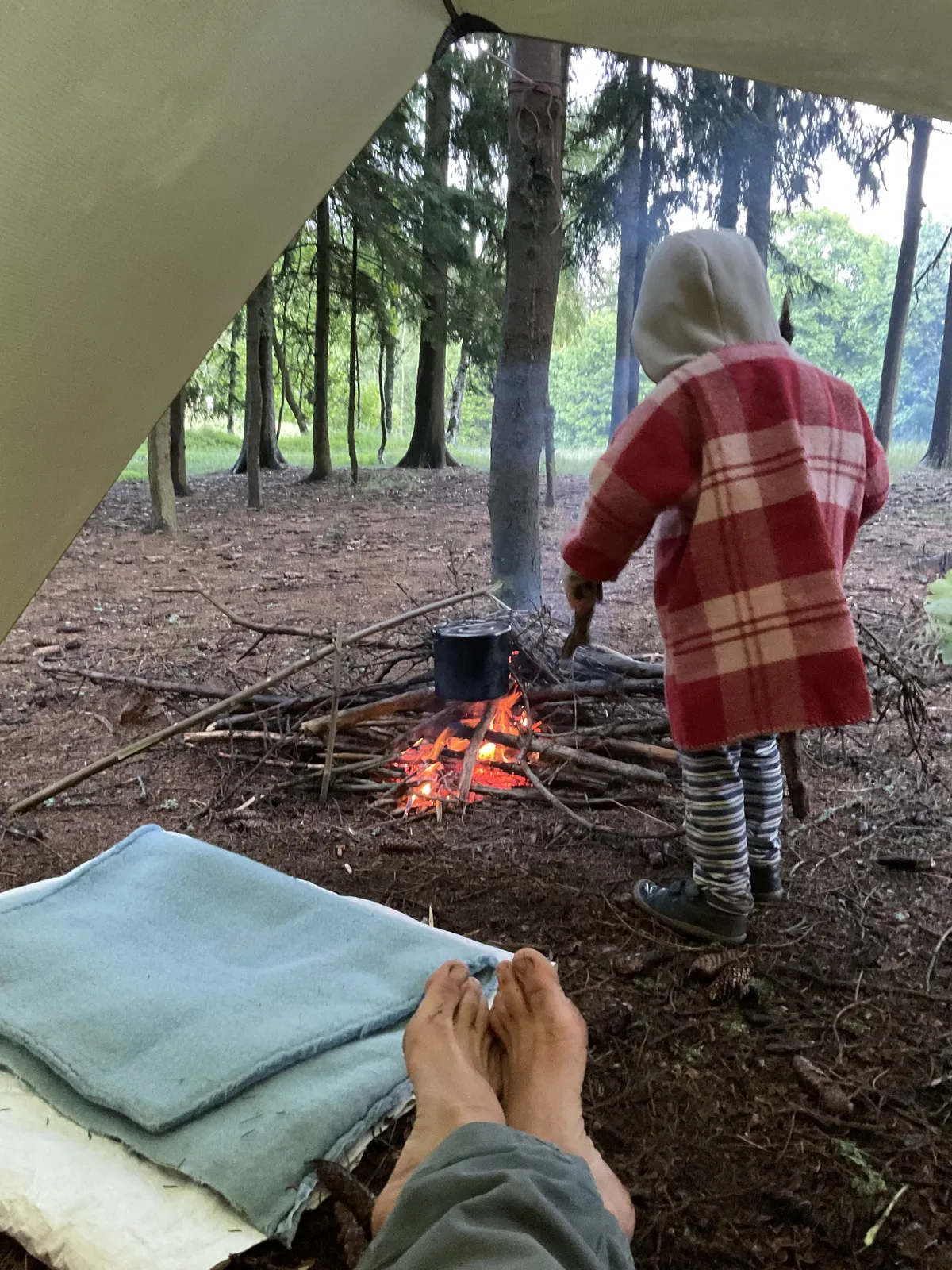
On the first day of our adventure, rain began to fall just a few hours after we set out. In a spruce forest, we strung the tarp between two trees and pitched the tent beneath it. A soft carpet of moss awaited us for our sleeping gear. Sheltered by the great spruces, I gathered dry, dead branches, lit a fire, and brought a nettle rice soup to the boil.
My son watched. He absorbed it all. It is through watching, then doing, that learning becomes complete. Growing familiar with these gestures, with this environment — observing the trees, the insects, the plants, the sky and the stars — long before giving any of them a name.
Is school wrong for our family?
The next morning, I woke early. I watched him sleep, then opened the tent door to look out at the forest in the rain. That moment enchanted me: my son asleep on our earth, the rain falling through the tall trees, the silence that nourishes.
When you have to take a child to school, you cannot let them sleep while you gaze quietly at the landscape. There are alarms, hurried dressing, rushing through breakfast, teeth brushed in seconds, driving. Running again — and what for? In winter, when the sun rises late, the body follows its own rhythm. School does not adjust its timetable.
I find myself asking: is school truly suited to the education of children — so young, from the age of three — or is it mainly suited to the “functionality” of parents in society, meaning their ability to work?
My choice is this: I would rather work less, involve my children in that work, live with fewer needs and fewer worries, and be able to live with my family in nature and among others. That is how things are for now. Everything can change.
Learning autonomy
On the third day, the sun returned. After breaking camp, we walked to a small lake. We fished three perch there, which we cooked over the fire for breakfast.
Autonomy is not taught through words alone. It is built, gesture by gesture, through repetition and trust. This journey was a silent lesson: watching his father search for dry wood in the rain, choose a campsite, read the sky before deciding whether to press on or stop. These decisions, made aloud or in silence, he absorbs.
There are things you cannot learn from a book. Knowing under which tree to make camp. Sensing when a fire is ready for a bigger log. Recognising the moment when your body says enough for today. These are forms of knowledge that settle in the body before they reach the mind.
What I wish for him is that he is never paralysed by the unknown. That he looks at a problem and has within him the instinct to search, to try, to adapt.
Those forty-five kilometres through the mountains, through rain and sun, pulling fifty kilograms with a child to watch over — that was part of it too. Showing him that effort leads somewhere. That discomfort passes. That the fire you light yourself warms you. That food is precious.