Feeding Yourself in the Taiga
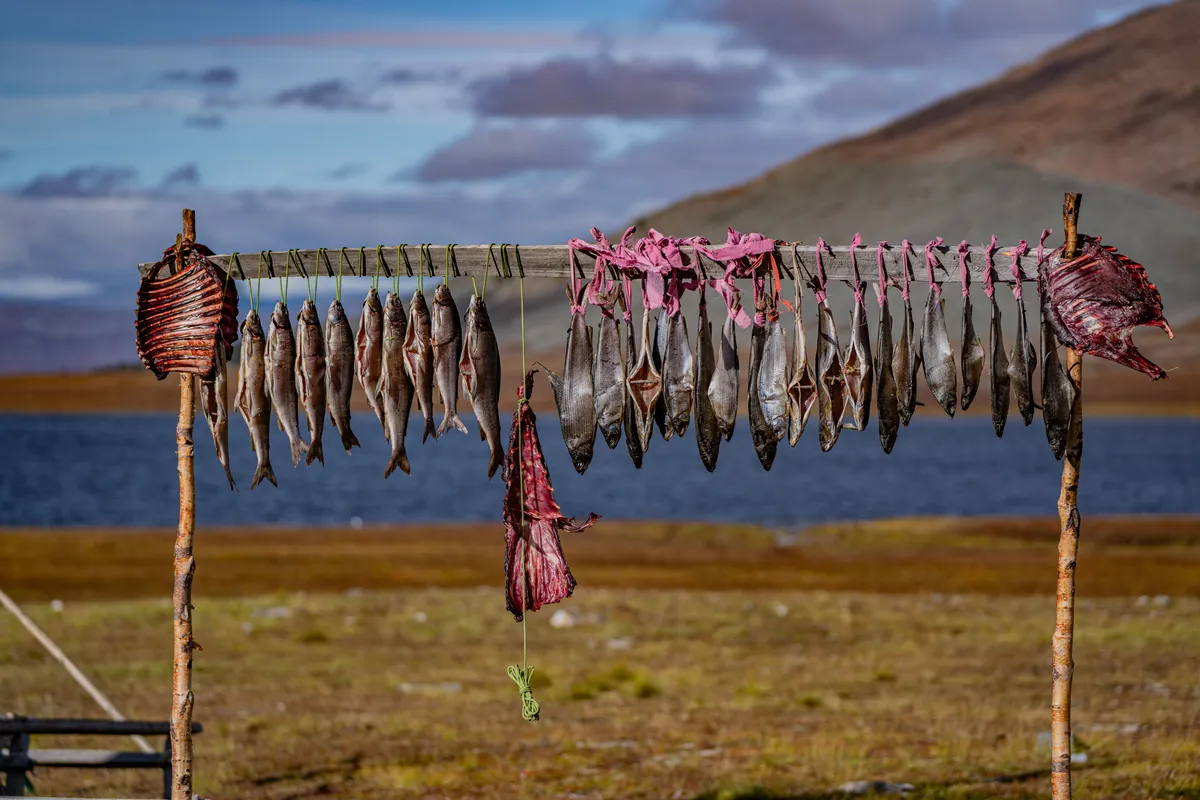
Feeding the body… far from supermarkets!
The wild diet of the Taiga and the Tundra is simple: fish, meat, berries, mushrooms and wild plants.
It is a ketogenic diet based mainly on fats and proteins, with vitamins, fibers and minerals. This diet contains almost no sugar, neither slow nor fast carbohydrates (very little in berries and cedar pine nuts). It is therefore very far from the diet of modern humans, which is mainly based on carbohydrates: sugars, cereals of all kinds, legumes and starchy foods.
My experiences of wild living allowed me to follow this diet fully, sometimes for several months eating only wild food. Here I share a little of my experience on this subject that fascinates me.
During my adventures, food autonomy is a goal in itself. It creates a strong bond with nature. I become dependent on it, just like all the beings that live within it.
This article may also help those who wish to join an expedition to prepare themselves better.
The immersions and expeditions are mainly based on fishing and gathering, but also on fasting, because fasting is inseparable from the wild diet. It takes part in the balance between abstinence and abundance.
Abstinence happens when there is nothing available — when it is not the season, not the right place, or when we fail to catch our prey. Abstinence is completely natural, yet we have lost the habit of it.
It is when food is rare that I enjoy it the most.
If eating is a primitive and necessary act, it is nevertheless not insignificant. It means taking the life of a plant or an animal in order to remain alive oneself.
I prepare long immersions in Siberia and Scandinavia by alternating intermittent fasting (eating once per day) and reducing carbohydrates as much as possible.
I also try to avoid what I consider stimulating and addictive: coffee, tea and sugar.
During the adventure, when the body feeds only on wild resources, I often observe the same rhythm of adaptation:
1
The enthusiasm of the beginning of the adventure. Great fatigue in the evening. The need to go to bed early and sleep a lot.
2
Intense physical effort becomes difficult. The body feels cold. Frequent muscle soreness. Need to drink a lot. Dry lips, sticky mouth, dark urine especially in the morning. Great hunger.
It often happens that I do not go to the toilet for more than a week. I need to sleep even more and sometimes take naps. Heavy sleep.
The mind must take over so the body can continue. Strength must come from within. The body begins to use all its reserves. It is a great cleansing.
3
Then things change.
Urine becomes clearer. The body gets used to living permanently outdoors. I feel light and dynamic.
Feelings of joy and gratitude appear. The landscapes nourish me as much as fish and berries.
I can easily be satisfied with one meal a day. A certain harmony appears between abundance and abstinence. Subtle nourishment takes as much place as physical food in the nourishment of my whole being.
4
It is when this balance appears that I must be most careful about the “return to civilization”.
If I arrive in a village, if someone invites me to eat, or if I enter a shop, my body — despite the balance achieved — tends to devour everything it sees.
I rejoice in rediscovering all the flavors, and the quantity of food I can eat is impressive. I feel like an animal.
This is where it can hurt. I must be very attentive and gradual, because “civilized” food becomes almost like a poison in a body purified by the wild diet.
Once again carbohydrates should be avoided and reintroduced progressively.
Fresh vegetables are wonderful medicine. Meat and fish too (their quality matters greatly).
This is only a part of my experience.
I do not speak here about the different seasons and the great changes they impose on the rhythm of life — that would make this article much longer.
Nor do I discuss all the varieties of plants, fish, mushrooms and animals that can be eaten, nor how to prepare them. It is a fascinating and very vast subject.